






Modular Architecture Products: The Future of Commercial Refreshes
Commercial spaces are experiencing a change. Businesses still care about how their offices, stores, and customer‑facing spaces look. However, many are now more careful about spending a lot of money on renovations. The reason is…

Commercial spaces are experiencing a change. Businesses still care about how their offices, stores, and customer‑facing spaces look. However, many are now more careful about spending a lot of money on renovations. The reason is simple. Business needs can change quickly.
A company may grow its workforce and need more meeting rooms. A retailer may change its branding and need a different customer experience. A restaurant may want to update its interior without closing for an extended time. A business may also move when a lease ends.
These conditions are creating a need for a different approach to commercial design. Instead of rebuilding an entire space whenever something changes, businesses are increasingly looking at modular architectural products.
Why Full-Scale Renovations Are Becoming Harder To Justify
Traditional commercial renovations are costly. They can cause a lot of disruption. The whole process of renovations can take weeks or even months.
For a business that relies on its location, renovations can create high costs beyond construction. A retail store may lose sales during a closure. An office may need temporary workspace. A restaurant may lose customers while construction is underway. There is also the question of permanence.
A business may invest heavily in a space only to discover that its needs have changed before renovations deliver their value. Shorter leases make this problem even more important. Businesses may hesitate to spend on improvements that cannot be taken with the business when it moves.
The Rise of the Modular Commercial Space
Modular products offer a much different way of working. Instead of treating every single wall and finish as something that stays forever, businesses can use products that are easier to install, modify, and replace.
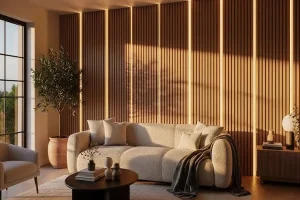
Architectural wall panels can change the look of a room without needing a rebuild. Modular partitions can break up spaces into smaller zones. Decorative systems can refresh an interior without having to tear out every existing surface. This approach also makes it much easier to make changes.
A business can change its environment as the needs of the business grow and change. That flexibility is very helpful in markets where companies are changing their office footprints and retail strategies more often than they used to.
The goal is not to stop spending money. The goal is to make sure that money spent on investments is more adaptable.
Lease Terms Are Changing Commercial Design
Lease duration influences how businesses make renovation decisions. Businesses used to view a long lease as a chance to build a highly customized space. Shorter lease terms bring a new calculation.
Devon Howard, CEO of Andor Willow, said, “What we see is a change in how retailers and commercial tenants think about their physical space. It is no longer a fixed asset; it is a variable one. Modular wall systems and architectural panels allow brands to change their environment on a schedule that matches their business, not their contractor’s schedule. When a lease lasts three to five years, you cannot afford to invest six figures into a buildout that you will leave behind.”
This shows a broader change in commercial real estate. Businesses are becoming more careful about putting money into spaces that may not stay suitable for them over the long term. Modular products can help lower that commitment while still letting companies create spaces.
Flexibility Is Becoming a Business Asset
Commercial space needs to support changing business conditions. A company that has ten employees today may have fifty employees two years from now. A retailer may introduce product categories. A showroom may need display areas. A professional office may need more private rooms.
Permanent construction can make these changes expensive. Modular systems can make reconfiguration easier. Partitions can be moved. Panels can be replaced. Areas can be reorganized without rebuilding the interior. This means flexibility itself becomes part of the property’s usefulness.
A space that can adapt to changing requirements may be more valuable to a tenant than one that is beautifully designed but difficult to modify.
Businesses Are Looking for Faster Refreshes
Time is another important factor. Traditional renovation involves different contractors and many stages of work. Traditional renovations may suffer delays when materials arrive late or when different trades need to coordinate their schedules.
Modular products can simplify some parts of the process. Certain systems are installed more quickly than traditional construction. Businesses update selected areas without shutting down the property. This approach can be very useful for retailers.
Store refresh a feature wall or create a display zone without completely rebuilding the sales floor. The same principle applies to offices. Companies create additional meeting spaces or private work areas without redesigning the entire floor.
The Economics Go Beyond the Initial Cost
Businesses must consider the life cycle of their commercial space. A cheaper renovation is not automatically better. They also need to consider ongoing expenses, such as business electricity rates, maintenance, and replacement costs. It can be tempting to see modular products just as a cheaper alternative compared to traditional construction. Cost is important, but the bigger benefit might be flexibility.
Jake Miakota, CEO at Subdivisions, explains, “Shorter lease cycles have completely changed the calculus for tenants. They are not willing to over-improve a space they might vacate in 36 months. The modular approach is not a cost play; it gives businesses real flexibility to reconfigure as their headcount or use case changes, which in today’s market is as valuable as the square footage itself.”
This argument shows an important point. Businesses must consider the life cycle of their commercial space. A cheaper renovation is not automatically better. A flexible system can create value because it can be reused or reconfigured as requirements change. That can reduce the need for another renovation later.
Quality Still Matters
The rise of modular design does not mean companies should pick the cheapest products available. Commercial spaces experience a lot of daily use. Walls and partitions can be moved around a lot. Materials need to be strong.
Installation quality is also important. A bad installation of a system can undermine the look and how well the space works.
Companies should think about how products will last over time. They should also think about maintenance and replacement.
The best modular approach mixes flexibility with high-quality performance. Companies should also think about how each product goes with the existing interior space. A modular part should look like it belongs, not like something that is just temporary. Good materials can maintain a look while letting the space change. This balance lets companies make areas that stay useful and attractive even when things change.
Conclusion
The commercial refresh economy is changing how businesses think about design. Shorter leases and new workplace needs are making it harder for some companies to justify permanent changes. Modular architectural products provide a flexible option.
Wall panels, partitions, and other systems that can be adapted can help businesses change their spaces without needing to rebuild. They can handle layout and brand changes while possibly cutting down on disruption and long-term costs.
The biggest change is not about saving money. It is about making spaces that can change as fast as the businesses that use them.