




Understanding RF Signal Generation for Modern Electronics Testing
Radio-frequency testing involves the use of equipment that can be used to generate controlled electrical signals with predictable frequency, amplitude and modulation characteristics. Whether it is a wireless communication circuit being validated by engineers, an…
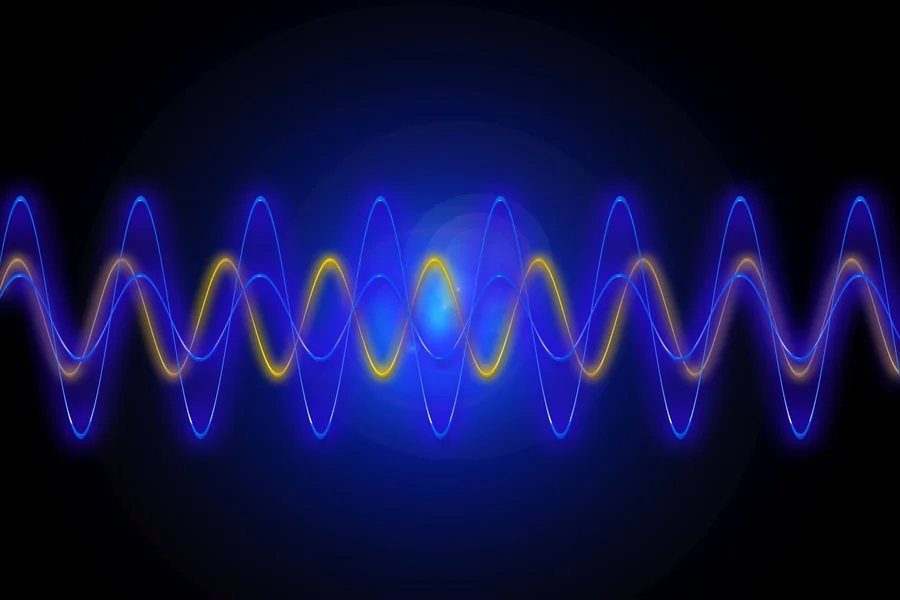
Radio-frequency testing involves the use of equipment that can be used to generate controlled electrical signals with predictable frequency, amplitude and modulation characteristics. Whether it is a wireless communication circuit being validated by engineers, an RF filter characterisation or a test amplifier, the stimulus signal quality has a direct impact on the reliability of the measurement.
This controlled source is rf frequency generator. In contrast to a simple function generator that is typically utilized to generate lower-frequency waveforms, an RF generator is designed to be active in much higher frequency bands, spanning the kilohertz range up to many gigahertz, depending on the instrumentation. The latest RF signal generator category available at RS Singapore is equipment in the range of hundreds of kilohertz, to as high as 26GHz.
How an RF Signal Generator Produces a Test Signal
The core of an RF generator is a frequency-synthesis system or oscillator that determines the frequency needed for the carrier. The instrument then sets parameters like the amplitude of the output and modulation after which the resulting RF signal is delivered to the device under test.
An average architecture consists of three significant functional blocks signal generation, modulation and output amplification.
The oscillator provides the basic RF carrier. The carrier may then be modified by a modulation stage to the desired test condition. Engineers can do this using amplitude modulation (AM), frequency modulation (FM), phase modulation (PM), pulse modulation or more complex digital modulation protocols depending on the equipment.
Lastly, there is an output stage that determines the signal level output to the test circuit. This gives engineers the ability to replicate controlled operational scenarios as opposed to working off unpredictable RF sources in the real world.
Frequency Range and Resolution
One of the most essential specifications in choosing an RF generator is frequency range. The minimum range will depend on the system under test.
The lower frequency RF gear may suit simple electronics and communication circuits, whereas the wireless and microwave may need multi-GHz capability. RF generators of RF generators sold by RS Singapore include designs with the highest sinewave frequencies of around 4400MHz and designs up to 26GHz.
It is also necessary to have frequency resolution. Instruments with resolutions of 10Hz and 0.001Hz are currently found in RS listings. Fine resolution enables engineers to make discrete frequency steps when testing filters, receivers, oscillators and other frequency sensitive circuits.
The stability of the internal time base is also important since the accuracy of frequencies may change with temperature and ageing and operating conditions. Laboratory generators of high quality thus utilize mostly regulated reference system to ensure predictable output frequencies.
Modulation for Real-World Signal Simulation
Some measurements can be made using an unmodulated carrier, but communication equipment usually requires to be tested with modulated signals.
AM varies the amplitude of the carrier, whereas FM varies the frequency of the carrier. PM changes the phase relationship of carrier. More developed RF generators may have the capability to implement complex digital modulation methods that may be used to generate realistic communication signals.
This is valuable where engineers desire to test the behavior of a receiver, amplifier or demodulator to certain conditions of a signal.
To illustrate, a communications engineer is able to create a controlled carrier, add modulation and subsequently monitor the processing of the device under test. The identical generator can then be scaled to explore the performance at various frequencies or signal levels.
Testing RF Filters and Amplifiers
Characterisation of analogue RF circuits is one of the most basic uses of RF signal generation.
Engineers are able to put a known frequency into a filter and measure the output of that filter. They can measure features like passbands, attenuation and frequency response by sweeping the generator over a frequency range.
RF amplifiers can be tested in a similar manner. Controlled input signal enables engineers to test gain, frequency response and signal behaviour at various operating levels.
RF input can also be carefully controlled to assess mixers and frequency converters. This renders signal generators useful components in electronics development laboratories, production testing and troubleshooting setups.
Signal Accuracy and Output Control
Usefulness of test signal is a factor of the extent to which it reflects the programmed conditions. Measurement quality is determined by frequency accuracy, amplitude accuracy, phase characteristics and signal stability.
Another important specification is the output impedance. Controlled impedance environments are often a common feature of RF test systems, to ensure that the generator and connected equipment interact predictably.
It is also important that the engineers make sure that the output level is that of the tested device. Too much RF power may cause harm to sensitive inputs, whereas too little signal may result in measurements which are hard to separate out of the noise floor of the system.
To this end, attenuation and output-level regulation are critical components of an RF test system.
Interfaces and Automated RF Testing
Contemporary RF generators are starting to be programmable lab tools as opposed to stand-alone bench tools.
Connectivity like USB or LAN enables setup of equipment to control or be a part of an automated test system. Particularly in choosing an RF generator to be used to remotely or automatically controlled, USB and LAN connectivity are found to be helpful considerations identified by RS.
Repeatability can be enhanced by automated testing since identical frequency, amplitude, a modulation and timing parameters can be used on numerous devices.
This is especially valuable in production setups where you may have to test a large quantity of electronic assemblies in relation to pre-established specifications.
RF Testing in Telecommunications and Electronics
RF generators are applicable in a variety of engineering fields. They are used in telecommunications laboratories, to stimulate wireless equipment and communication circuits. They are employed by electronics engineers in the creation of filters, amplifiers, mixers and oscillators.
They are also able to aid the electromagnetic compatibility and pre-compliance testing through generating controlled signals, which assist the engineers research the behavior of equipment under certain RF conditions.
Another application that is relevant is automotive electronics since the systems in current vehicles are becoming more and more wireless and RF-enabled.
Selecting the Right Generator
When choosing an rf frequency generator, engineers should first establish the required frequency range and then consider modulation support, frequency resolution, output power and accuracy.
Interface options become important when the instrument needs to be integrated with automated test equipment. Portability may also matter for field testing, where compact or computer-controlled generators can provide greater flexibility.
The objective is not simply to select the instrument with the highest frequency specification. A generator should provide the required combination of frequency coverage, signal quality, modulation capability, output control and connectivity for the intended test environment.
The Future of RF Signal Testing
As wireless systems move toward higher frequencies and increasingly complex modulation schemes, RF test equipment must provide greater control and precision. Higher-frequency synthesis, programmable signal generation, digital modulation and automated laboratory control are becoming increasingly important.
The modern RF generator therefore serves as more than a source of a single carrier. It is a programmable stimulus platform that allows engineers to reproduce controlled RF conditions, investigate circuit behaviour and validate electronic systems before deployment.
With accurate frequency control, configurable modulation and computer-based automation, RF signal generation remains a fundamental technology for developing and testing the next generation of wireless and high-frequency electronic systems.