







Why Healthcare and Fitness Apps Lose Users After Onboarding — and How to Fix Retention
Onboarding for many apps creates an avenue for product milestone achievements. Users create an account, set certain health goals, connect a device, book a consultation, and start a plan. The dashboard shows activity for initial…
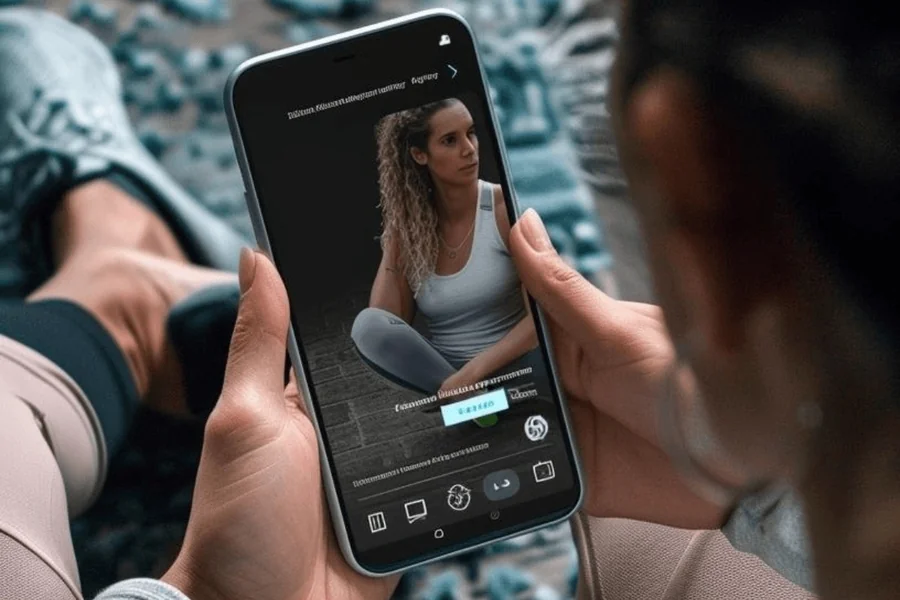
Onboarding for many apps creates an avenue for product milestone achievements. Users create an account, set certain health goals, connect a device, book a consultation, and start a plan. The dashboard shows activity for initial product purchases, and the product team can confidently progress to the next sprint.
Then usage declines.
With enterprise technology, the declining usage of the app is more than a mobile app problem. The declining usage impacts revenue, care engagement and optimization, the satisfaction of subscriber use, operational efficiency, and digital transformation progress. The usage decline also highlights significant problems in engineering, analytics, real-time and lifecycle infrastructure, operational user engagement, and return on investment.
The market is not without demand. Reports from the past several years show that health and fitness apps are still among the most downloaded and quickest growing categories of apps. The challenge is not acquiring customers, it is retaining customers. Retention of healthcare and fitness apps is a requirement to become a part of the user’s everyday life.
For enterprise teams, healthcare app development now means more than secure intake flows, appointment booking, patient portals, and access to records. The product must create repeat value after the first session.
That is where many apps lose users.
Why Users Drop Off After the First Session
Onboarding establishes intent. Retention confirms fit.
Onboarding in many healthcare and fitness apps gathers goal, health, routine, and motivational information and other preferences. Many products then, at best, use that data in surface-level ways.
A resident managing diabetes goes on a generalized journey just like a general wellness user, and a new runner gets the same prompts as the elite runner. A user recovering from an injury receives reminders that totally disregard their risk, readiness, and confidence. If a product asks personal questions, then the user deserves an experience that is as personal as the questions.
The same thing happens in the development of fitness apps. Workout libraries, calorie tracking, integrations with wearables, and even dashboards of progress won’t sustain interest if the experience isn’t behavior-altering.
Personalization Stops Too Early
Profile creation puts a stop to any personalization. The user is given a plan, a home screen, reminders, and content. After this, the user picks up on the product as what is a ‘static’ experience.
Expectations maintained after the first drop-off can create many instances of user-defined personalization. The expectation of carrying out a care plan, moving and adapting plans to fit the user, addressing risks, and altering plans due to user-defined merit all create the basis for many ideas that user-defined personalization can bring on.
The user’s issues tend to run deeper than the app’s interface. The data model does not encapsulate context. Significant user behavior is not captured. Interfaces for wearables go beyond basic connection. Notifications use rigid templates rather than optimize behavior. The app can onboard customers, but it does not retain them.
Users Leave When Value of Next Action is Unclear
The biggest driver of user attrition is the perception of the next action as unclear, tedious, or nonsensical.
Should the user complete an assessment, schedule an appointment, record appropriate health information, verify health status, message the committee, or wait for further communication? Would it be more valuable for the fitness user to repeat his workout, modify his workout, rest and recover, set more rigorous nutritional obstacles, or alter his goal to something altogether different?
In all the examples, the product doesn’t facilitate the transition from thought to action.
The first 30 days of use are extremely important. Users are still deciding if the app is truly valuable and if it should slot into their daily routine. The product should clearly relay to the user ‘this is what you should do, here is why you should do it now, and here is what progress/benefit you will get out of it’.
If the app fails to convey this, the user is less likely to continue using it.
Retention Needs Product, Data, and Platform Alignment
A classic example is when an enterprise addresses user attrition (also known as churn) with superficial changes. Simplified onboarding, a convenient home screen layout, the addition of streaks, changes to notification language and design; they can assist in retaining customers but don’t really get to the heart of the matter.
Retention requires a product, data, and platform alignment.
High-performance Healthcare and fitness apps require specific components to function properly. These components include secure identity, consent management, and analytics governance. Apps also need flexible content systems to respond to user behavior. Other necessary elements include reliability, observability, and performance. Lastly, user care, support, content systems, and lifecycle flexibility are also important to the functioning of the apps.
Though friction may decrease with the redesign of the onboarding screen, the structural issues and weaknesses with data flows, unreliable sync, care journeys, and engagement logic will still remain.
Concerning Activation Metrics.
A completed profile does not equal activation.
Examples of stronger activation metrics for healthcare apps may include, but are not limited to, the booking of an appointment, completion of an intake form, the setting of a medication reminder, review of a care plan, sending a message to a provider, completion of an insurance requirement, and/or review of a lab result.
The completion of a first workout and the completion of a second workout, a seven day sync with a fitness tracker, the logging of a nutrition entry, entry of a recovery session, and review of goals may also be stronger examples of activation for fitness apps.
Whether or not the product promise involves access to care, behavior change, or something totally different, activation means that users saw and interacted with the offering.
This point is integral for tech leaders’ consideration, as poor activation metrics are a strong indication of the product’s potential.
Lifecycle Systems Need More Flexibility
Retention work slows as more releases are required to make even minor lifecycle system changes.
Product teams need to implement faster testing of any journeys, notifications, reminders, content, goal flows, and recovery paths without any release bottlenecks. Feature flags, remote configuration, experimentation systems, and governed content workflows enable teams to alter experiences without compromising compliance, brand control, and clinical oversight.
In the healthcare and fitness industries, the need for flexible adjustments is continually shifting. For example, a patient may complete a certain step of a journey, but then pause and not continue on. A fitness user may have a high level of high activity in the beginning, but may completely stop after a few days. It is also possible to lose user trust after a wearables sync issue. A care journey may lose user interest and momentum after a form, a payment step, or a possible eligibility check friction is presented.
Retention increases substantially when the platform is able to identify those moments to improve and act with appropriate next steps.
5 Healthcare App Development Companies in the USA to Assist with the Development of Retention-Focused Apps
We identified the companies based on the data available from the Clutch profile, focusing on the ratings and the number of reviews. As per your request, GeekyAnts is listed first. The other companies are located in the USA and have fewer Clutch reviews. As reviews and ratings are updated, procurement teams can confirm accuracy.
- GeekyAnts
GeekyAnts is an internationally headquartered consulting firm that specializes in the complete digital transformation process for its clients. This includes everything from complete app development to the crafting and development of unique digital products and software. GeekyAnts’s MELTD (mobile, web, engineering, AI, and enterprise digital) portfolio aligns with healthcare and fitness teams looking to evolve retention-centric product engineering.
Website: www.geekyants.com/en-us. Email: info@geekyants.com.; Phone: +1 845 534 6825.
- TekRevol
TekRevol is known for its work across multiple sectors. The company’s U.S. presence has spread to a number of states, including Houston, Chicago, Austin, Washington D.C., and Dallas, meaning that most North American clients with dispersed end-users can work with them. The company supports app development, and product development and digital platforms.
- BairesDev
BairesDev offers a possibility for flexible and scalable support. They offer many options: staffing, cloud development, support, and mobile development. All of this combined, especially for the healthcare and fitness industries, will allow a company to easily integrate user friendly mobile applications to be used with backend data delivery and/or workflow systems.
Clutch rating: 4.9 based on 62 reviews. Address: 50 California Street, San Francisco, CA, USA. Phone: +1 408 478 2739.
- AppsChopper
AppsChopper app development, UX, app management, and help with product launches. Improving the consumer experience and stickiness of healthcare or fitness apps is often determined by mobile performance, usability, and support success after the launch. For teams seeking a combined delivery model of app design, mobile development, maintenance, and user experience enhancements, AppsChopper is a good choice.
Clutch rating: 4.8 based on 41 reviews. Address: 275 Seventh Avenue, 7th Floor, New York, NY 10001, USA. Phone: +1 833 602 4472
- Utility
Utility offers bespoke mobile applications, custom software, and other services. For the healthcare and fitness industries, specialized mobile consumer experiences, product journeys, and notifications to sustain engagement, can greatly benefit from Utility’s services, especially to modernize existing apps and maximize user engagement. Product journeys and notifications can be adjusted to conserve and stimulate user engagement.
Clutch rating: 4.8 based on 26 reviews. Address: 135 Madison Avenue, New York, NY 10016, USA. Phone: +1 212 328 1167.
Conclusion
Apps dedicated to healthcare and fitness see a post-onboarding user drop-off as a result of experiences that become static once a user integration has occurred. The onboarding session relates user intent, while retention is a function of guidance, trust, context, progress, and reliability.
Enterprise teams dedicated to retention understand that not viewing churn as a pure design challenge is critical. They take a unified approach to product analytics, personalization, design and product infrastructure, seamless setting integrations, compliance, and user experience.
It is not critical to ask whether an app requires additional functionalities. A better question is where the user journey becomes stagnant post onboarding. A targeted consultation can assist teams to determine whether the retention problem lies with activation metrics, the platform architecture, lifecycle systems, integration quality, or product experience.