







How Efficient Pharmacy Shelving Streamlines Daily Operations
Picture a busy Tuesday afternoon at the pharmacy counter. Three phones are ringing. A line is forming. A technician is looking in three different bays for one bottle of Amoxiclav 625, which should be easily…
Picture a busy Tuesday afternoon at the pharmacy counter.
Three phones are ringing. A line is forming. A technician is looking in three different bays for one bottle of Amoxiclav 625, which should be easily accessible. But that scramble isn’t just frustrating; it also takes time away from the accuracy and patient care that pharmacies need to prioritize.
In the meantime, customers wait longer, and employees have less time to dedicate to tasks that demand their attention.
In many instances, more staff and a bigger facility are not the answer. It’s intelligent storage and organization. Optimized shelving equals decreased searching equals increased speed equals an easier day at the counter for everyone.
Let’s look at five ways that a well-planned system, based on pharmacy shelving, propels the chain, from the back stockroom to the pickup window.
1. Speeds Up Filling Prescription
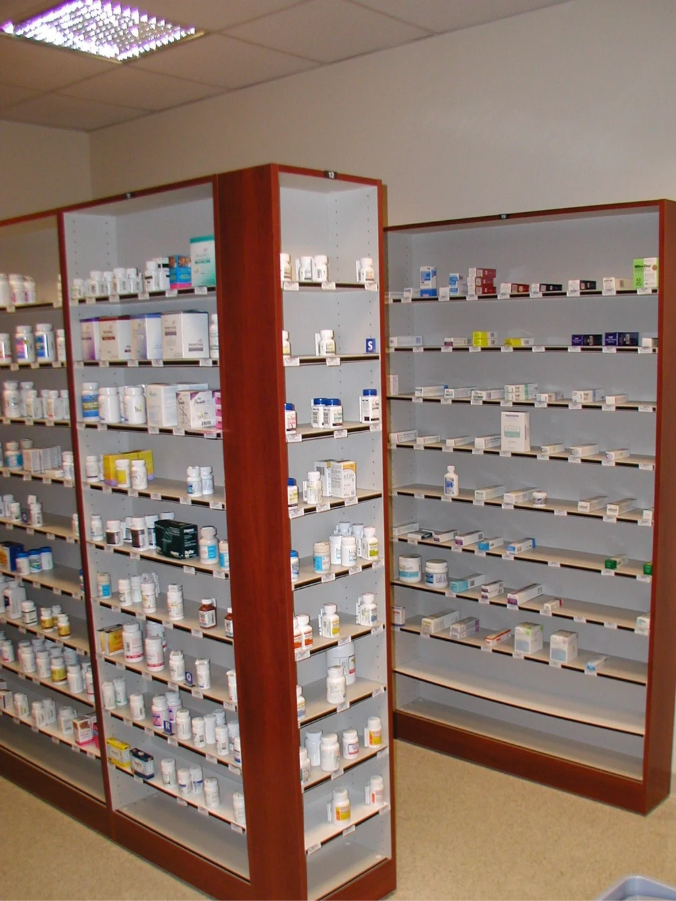
One of the most immediate benefits of pharmacy shelving is that it reduces the amount of time required to look up, pull, and fill a prescription. Medications that are grouped logically on the shelf also save real time, whether they are organized:
- By therapeutic class: drugs grouped together.
- Alphabetically, for quick recognition
- By dispensing frequency, keeping fast movers within easy reach
If the shelf itself is one of these systems, then technicians don’t have to search so much, and they spend more time verifying. In other words, that’s the difference that adds up to the change—seconds saved at the shelf are seconds restored at the counter, which means less stress on staff and shorter lines.
2. Fewer Search Errors and Repetition

Rework is a more subtle drag on operations as a result of the disorganized shelving. Two similar bottles lie side by side, and a technician picks up the wrong one; or a bottle is hidden behind another product on a crowded shelf, and the technician forgets to grab it. That one error means that the prescription must be pulled, corrected, and then re-verified, which doubles up on the labor of one fill.
This is a problem that is prevented or created on the shelf. Multiple shelving is arranged by zone and clearly labeled so that medicines which look alike or have similar names are physically separated, before a pharmacist’s hand ever reaches the wrong bottle.
A community pharmacy dispensing errors review found that, redesign of the workflow is a major component of error reduction, and the first physical step is to the shelves for each dispensing.
3. Better Use of Limited Square Footage
Whether in a hospital basement or a retail strip mall, most pharmacies operate with limited space. Adjustable, high-density shelving can make limited space more usable by providing flexible storage options such as:
- Sliding units to compress unused aisle space
- Seasonal overflow of mobile carriages.
- Stackable bins for small-size, high-turnover items
This flexibility is crucial when there are rapid changes in demand, like during a flu pandemic or the sudden rollout of a new vaccine, where the stock levels can change daily. Staff can expand shelving to accommodate additional storage space instead of hiring additional storage space or stacking overflow carts in the aisles.
4. Reduces Staff Fatigue
Repeated bending, stretching, and reaching, as required throughout a full shift, can be physically demanding, especially when shelving requires staff to work at an awkward height. A day’s physical pattern is altered with shelving designed with ergonomics in mind, particularly with two changes:
- Placing high-frequency medications at waist height, where they are pulled most often
- Keeping heavier stock at lower levels away from shoulder level
To measure the impact of this project, a pediatric hospital looked at the rate of missing requests for medication before and after the project, as well as the labor cost of a missing medication – which is not only a burden to staff, but is a cost to the hospital due to poor physical setup.
5. Simplifies Inventory Management and Restocking
A well-organized shelving system can also make it easier to perform daily inventory activities such as medication reordering, counting stock, and checking expiration dates. Allocating separate zones on the shelf to each category alters the speed of staff working, especially for:
- Controlled substances kept in a clearly marked, secured area
- Refrigerated product away from room temperature stock
- Product recalls or expirations that are separated from inventory.
This organization of the shelves allows employees to see the stock and not have to search through bins to find it. The same layout also facilitates quicker audits and inspections, as inventory is already housed in the manner that is required for reporting. While the shelf itself cannot ensure compliance, it does take a lot of the friction out of compliance checks.
Wrapping It Up
Pharmacy shelving isn’t simply furniture; it is the foundation of almost all the tasks that a pharmacy does each day. Staff can save time searching and spend more time filling prescriptions, managing inventory, and serving patients. Those gains are reflected in the efficiency that is experienced every day, and on the bottom line as well. When the direction of the setup is against the team, it’s time to take a second look.
However, the solution is not necessarily to expand the pharmacist space; a more efficient shelving system can work wonders for making the current space more efficient.