







How Smart Route Planning Tools Help You Map a Route With Several Stops in Real Time
Modern logistics operations no longer struggle because vehicles are unavailable. They struggle because routes break under real-world execution pressure. Traffic changes mid-shift → Drivers get delayed at the docks → Urgent orders enter the network…
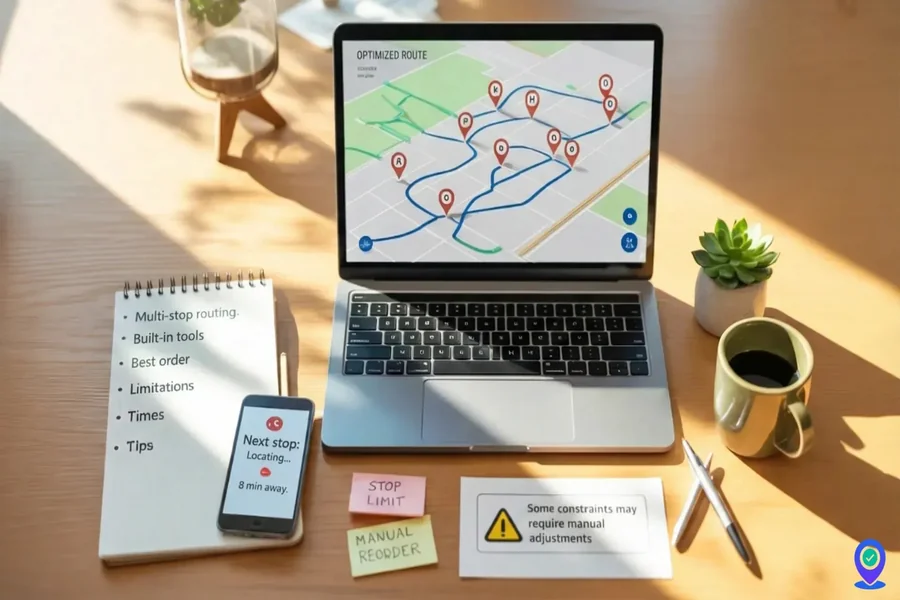
Modern logistics operations no longer struggle because vehicles are unavailable. They struggle because routes break under real-world execution pressure.
Traffic changes mid-shift → Drivers get delayed at the docks → Urgent orders enter the network unexpectedly → Customers request delivery changes → Hub congestion disrupts loading schedules. Dispatch teams spend hours fixing routes manually while delivery costs continue rising.
This is why businesses are moving away from traditional route planning and adopting intelligent route optimization systems that can map a route with several stops in real time.
Today’s route planning tools do far more than generate driving directions. They continuously optimize delivery sequences, dynamically adjust schedules, manage fleet capacity, improve ETA accuracy, reduce empty miles, and help logistics teams maintain operational control across high-volume delivery networks.
Let’s understand how modern routing technology is transforming fleet efficiency and why real-time route optimization is becoming a competitive advantage across logistics operations.
Why Mapping Multiple Stops Manually No Longer Works at Scale
Many logistics teams still rely on spreadsheets, dispatcher experience, or fixed maps to plan routes. That approach may work for small fleets, but complexity rises rapidly once operations scale.
A route with several delivery stops introduces multiple operational variables simultaneously:
- Delivery time windows
- Vehicle capacity constraints
- Driver shifts
- Traffic conditions
- Dock schedules
- Reverse pickups
- Service durations
- Customer priority levels
- Compliance requirements
The challenge is not finding the shortest route. The challenge is finding the most operationally feasible route while balancing cost, SLA commitments, fleet utilization, and execution reliability.
This becomes even harder during:
- Same-day deliveries
- High-volume last-mile operations
- Retail replenishment
- FMCG distribution
- Hyperlocal delivery networks
- Multi-depot logistics operations
Modern route planning software solves this by replacing traditional route creation with continuous optimization powered by AI, machine learning, telematics, and live operational data.
What Smart Route Planning Tools Actually Do
Smart routing systems are built to optimize the entire delivery network, not just navigation paths.
These systems continuously analyze:
- Driver schedules
- Vehicle capacity
- Live traffic
- Historical route performance
- Stop density
- Delivery windows
- Road restrictions
- Weather disruptions
- Hub capacity
- Order priority
Instead of dispatchers manually rearranging deliveries throughout the day, the optimization engine recalculates routes dynamically as operational conditions change.
This allows businesses to map routes with several stops while still protecting on-time performance and fleet productivity.
How Real-time Route Optimization Improves Fleet Efficiency
Real-time route optimization improves fleet efficiency by helping logistics teams adapt instantly to disruptions while continuously improving delivery speed, fuel efficiency, and operational productivity.
Dynamic Rerouting Reduces Operational Disruption
Fixed routes fail because logistics environments are unpredictable. A vehicle may encounter:
- Congestion
- Road closures
- Failed delivery attempts
- Delayed loading
- Parking restrictions
- Driver absenteeism
- Severe weather conditions
Modern route planning tools continuously monitor execution and reroute vehicles in real time.
Instead of waiting for dispatchers to intervene manually, the system recalculates the best possible delivery sequence instantly. This minimizes delays, reduces idle time, and protects delivery SLAs throughout the shift.
Better Stop Sequencing Reduces Fuel and Mileage Costs
One of the highest hidden costs in logistics is inefficient stop sequencing.
Poor route planning creates:
- Route overlap
- Excessive mileage
- Unbalanced workloads
- Driver overtime
- Increased fuel consumption
AI-driven route optimization improves stop clustering by analyzing geography, delivery windows, traffic patterns, and vehicle capacity simultaneously.
This helps fleets:
- Reduce unnecessary miles
- Increase stops per route
- Lower fuel consumption
- Improve driver productivity
- Reduce cost per delivery
FarEye reports that AI-powered route optimization has helped businesses save millions of kilometers through smarter route sequencing and operational optimization.
Why Real-time Visibility Matters in Modern Logistics
Route optimization without execution visibility creates operational blind spots. Modern route planning systems now act as live operational control towers that provide visibility into:
- Vehicle location
- Route adherence
- Delivery progress
- Dwell time
- Delayed stops
- Driver idle time
- ETA variance
- Failed delivery risk
This visibility helps logistics teams identify disruptions before they escalate into SLA failures. Instead of reacting after deliveries fail, operations teams can proactively:
- Reroute vehicles
- Reassign deliveries
- Update customers
- Reduce detention time
- Manage congestion
- Improve resource allocation
Real-time execution visibility is now becoming as important as route optimization itself.
How Smart Routing Improves Delivery Capacity Utilization
Underutilized vehicles quietly increase logistics costs across delivery networks. Many fleets still operate with:
- Low stop density
- Half-loaded vehicles
- Poor territory balancing
- Inefficient shift utilization
Smart route planning tools improve utilization by optimizing:
- Vehicle capacity
- Territory allocation
- Stop density
- Driver scheduling
- Shift balancing
- Delivery clustering
This helps businesses complete more deliveries using the same fleet size.
During high-volume periods, intelligent routing becomes even more important because capacity constraints increase rapidly. AI-driven optimization helps logistics teams absorb volume spikes without proportionally increasing operational costs.
Reducing Empty Backhauls Through Intelligent Route Planning
Empty return miles continue to be one of the biggest profitability leaks in transportation operations. Modern routing systems reduce empty backhauls by identifying:
- Nearby pickup opportunities
- Reverse logistics assignments
- Redistribution movements
- Supplier collections
- Dynamic return loads
Instead of vehicles returning empty after deliveries, businesses can increase asset productivity through better route orchestration.
This improves:
- Revenue per mile
- Vehicle utilization
- Fuel efficiency
- Fleet profitability
For enterprise logistics networks, reducing deadhead miles creates a major operational advantage.
Why AI-driven Route Planning is Becoming Critical
Traditional routing systems optimize routes based on predefined assumptions. AI-powered route optimization software continuously learns from operational data such as:
- Historical dwell times
- Driver behavior
- Congestion trends
- Delivery performance
- Route deviations
- Service time patterns
This allows the routing engine to improve over time.
Modern AI-based systems can now:
- Predict delivery risk earlier
- Improve ETA accuracy
- Recommend rerouting proactively
- Balance workloads dynamically
- Protect on-time delivery performance
AI-powered routing capabilities support dynamic routing, real-time optimization, territory planning, and predictive dispatch orchestration for large-scale logistics operations.
The Growing Importance of Compliance-aware Routing
As delivery operations scale, route planning must also account for operational compliance.
Modern systems now integrate:
- Driver Hours-of-Service rules
- Shift constraints
- Vehicle restrictions
- Regional compliance policies
- Delivery time commitments
This helps businesses avoid:
- Driver fatigue
- Compliance violations
- Delivery failures
- Excess overtime
- Unsafe dispatch practices
Routes are no longer optimized only for speed. They are optimized for operational feasibility and execution reliability.
Why Logistics Operations are Shifting Toward AI Dispatch Orchestration
The logistics industry is moving beyond basic route planning into AI-led operational orchestration.
Modern enterprise operations now require systems that can:
- Validate orders
- Plan routes
- Assign drivers
- Monitor execution
- Recover failed deliveries
- Audit proof of delivery
- Manage dispatch exceptions
- Coordinate workflows in real time
This is where agentic AI systems are beginning to reshape logistics execution.
An AI dispatcher model is designed to automate and orchestrate multiple logistics workflows simultaneously while keeping humans in the loop for operational oversight. The platform coordinates planning, execution, rerouting, delivery recovery, and dispatch decisions within one connected workflow.
The Way Forward for Smarter Multi-stop Routing
The ability to map a route with several stops is no longer just a routing challenge. It is now a real-time operational optimization problem. Modern logistics operations require systems that can continuously adapt to changing delivery conditions while balancing:
- Cost efficiency
- Fleet utilization
- Driver productivity
- ETA accuracy
- Delivery reliability
- Compliance
- Sustainability goals
This is why intelligent route planning platforms are becoming central to supply chain execution strategies.
Technology partners such as FarEye fit naturally into this shift toward AI-driven logistics orchestration. Their routing, dynamic scheduling, execution visibility, territory optimization, and AI-powered dispatch capabilities help enterprises manage large-scale delivery operations with greater control and operational agility.